01Your managers change roles.
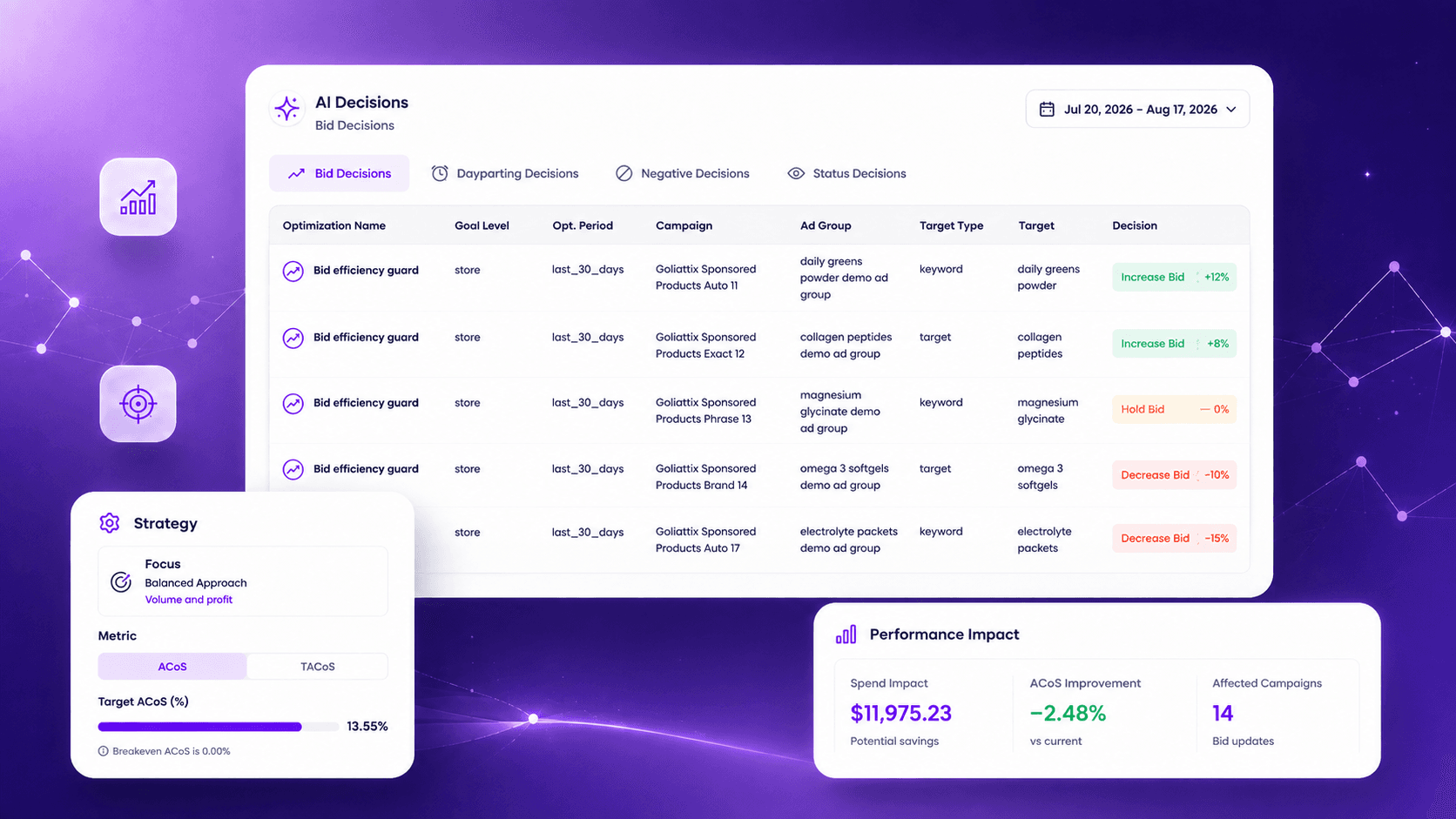
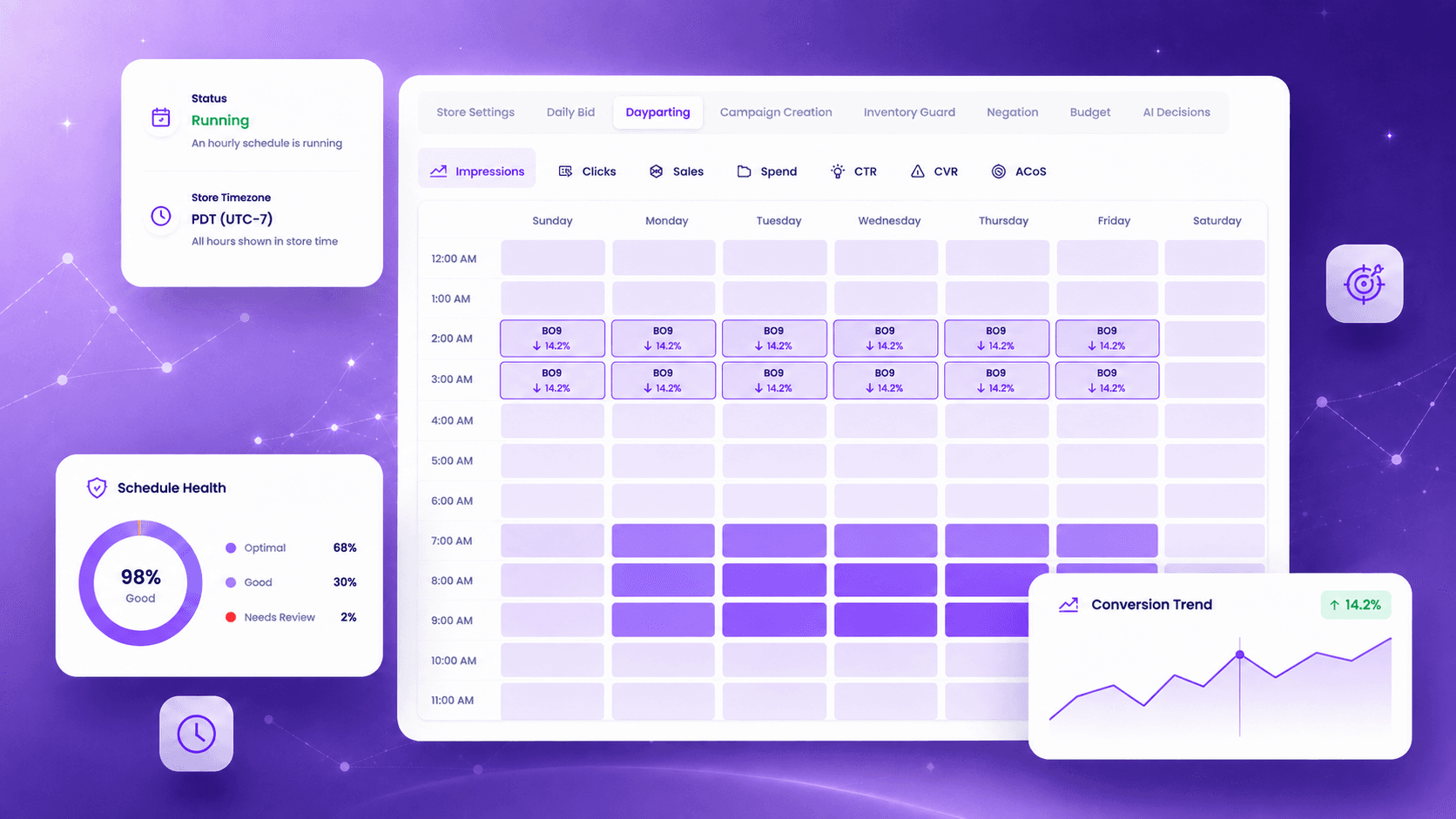
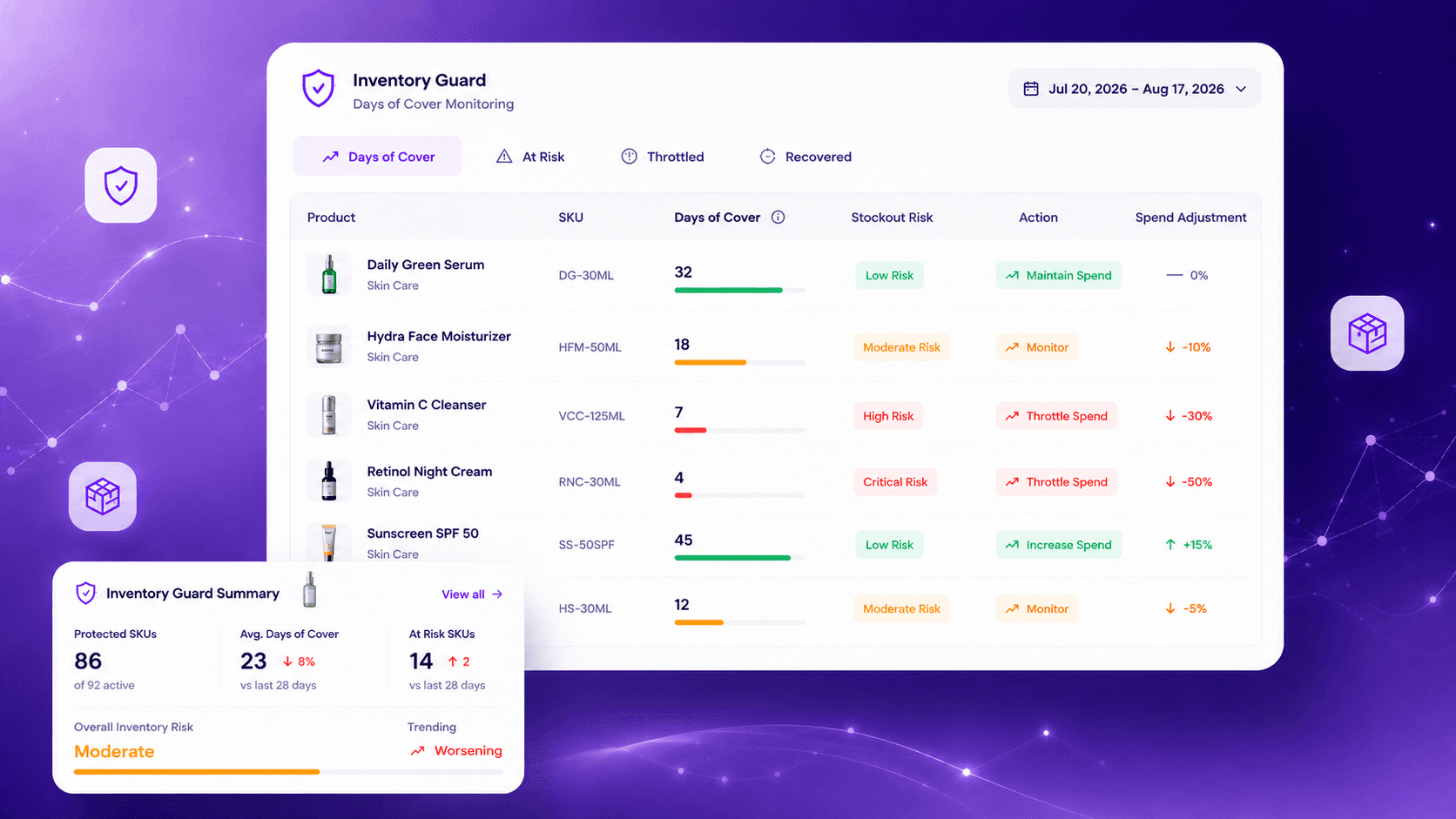
A manager's day is mostly review: check the bids, check the budgets, check what drifted. That work has a ceiling, and the ceiling is a person. Here the execution layer runs continuously inside the rules you set, so the manager's job becomes deciding what those rules should be, per client, per catalog, per stage.
02What you sell to clients changes.
When execution is a given, the conversation with a client is no longer about what you adjusted last week. It is about which products to back, when to launch, where the category is moving, and what the account should look like in six months. That is a different service, and it is priced differently.
03A junior's accounts run like a senior's.
Optimization logic is set once and applied identically everywhere. A new manager does not have to learn the strategy before being trusted with an account. They inherit it already running, and spend their time learning the client instead. A new specialist is productive in weeks, not months, because the playbook is already in the account.
04More accounts per manager.
Capacity follows from the role change rather than from working faster. When throughput is not capped by review time, the number of accounts a manager can run well stops being a headcount question.
05Evidence you can show a client.
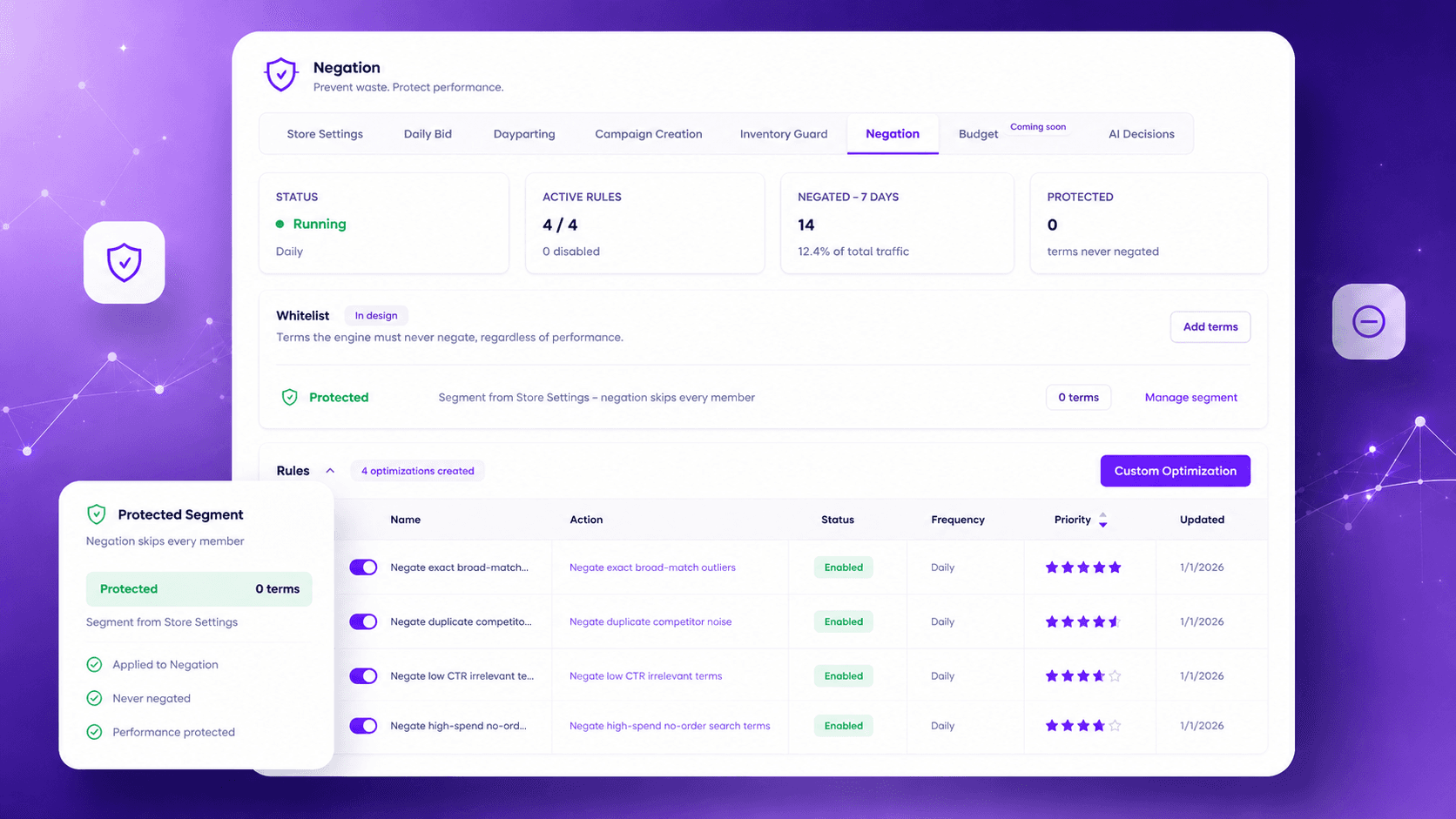
Every bid change, negation, budget shift and pause is recorded with the signal behind it. Client reporting becomes an export rather than a reconstruction, and renewal conversations rest on a record rather than a narrative.
06Different rules for different clients.
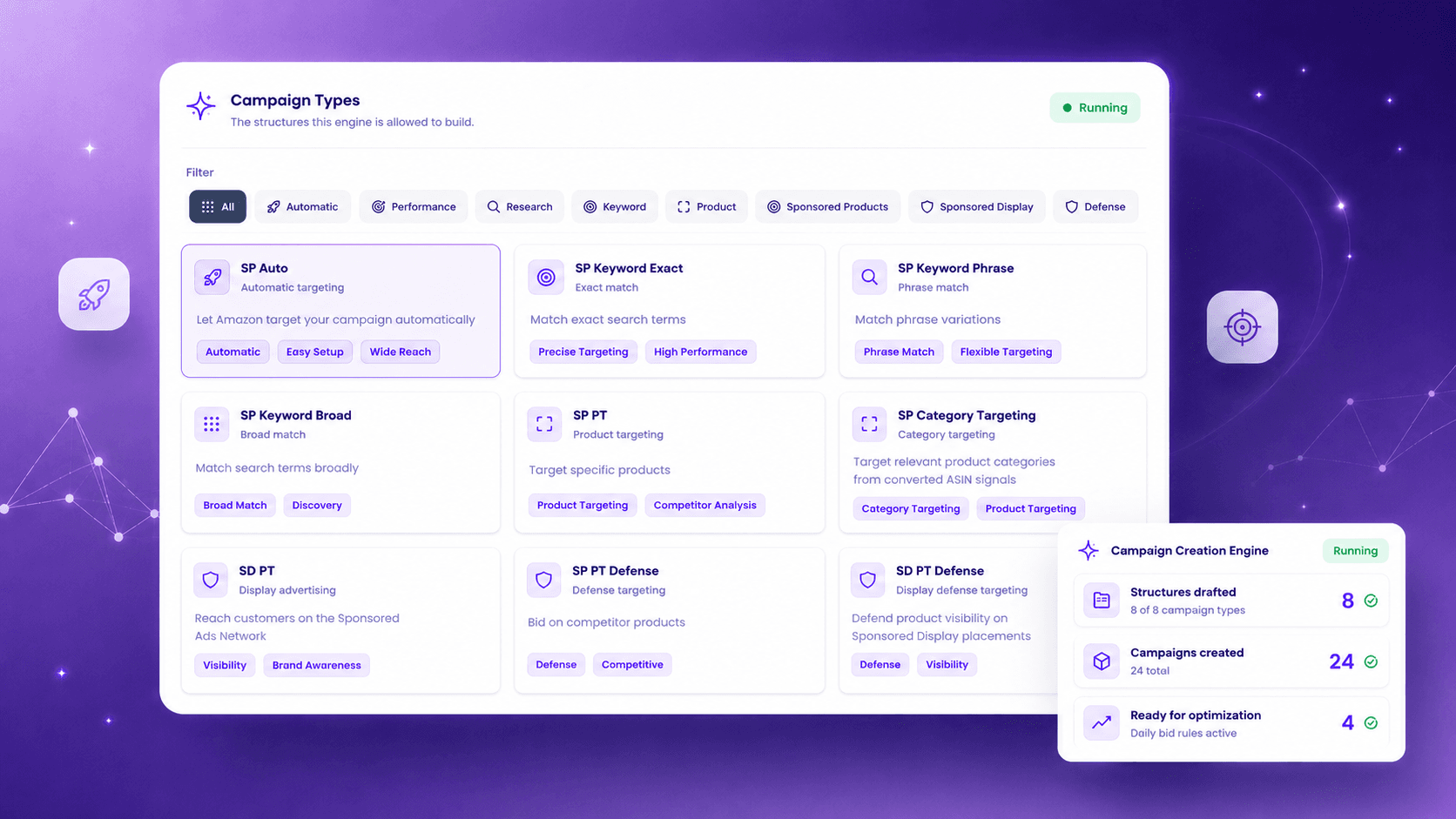
Configuration is per client, per segment, and per product. A launch brand and a mature catalog do not share a strategy, and here they do not have to share a configuration either.